Introduction
Ellie Robinson is one of the most inspiring figures in British sport. Known for her remarkable achievements in Paralympic swimming, she captured the hearts of millions with her determination, resilience, and incredible talent at a very young age. Despite facing physical challenges throughout her life, Robinson refused to let disability define her future. Instead, she transformed adversity into success and became one of the brightest stars in British para swimming.
From winning Paralympic gold as a teenager to becoming a role model for young athletes across the United Kingdom, Ellie Robinson’s story is one of courage, ambition, and perseverance. Her achievements in the pool, combined with her positive attitude and honesty about the difficulties she faced, made her a respected figure both in and out of sport.
This article explores Ellie Robinson’s life, disability, swimming career, achievements, personal struggles, retirement, and lasting impact on British sport.
Early Life of Ellie Robinson
Ellie Robinson was born on 30 August 2001 in Northampton, England. From an early age, she displayed a strong personality and competitive spirit. However, her childhood was not without challenges. Robinson was born with a rare condition known as cartilage-hair hypoplasia, a form of dwarfism that affects bone growth and physical development.
Growing up with a disability often meant facing difficulties that many children never experience. Yet Ellie developed resilience and confidence early in life. Her family played a huge role in supporting her ambitions and encouraging her to focus on what she could achieve rather than what limitations others expected her to have.
Swimming quickly became an important part of her life. Initially, it was introduced as a way to improve her physical strength and mobility, but it soon became clear that she possessed extraordinary talent in the water.
Ellie Robinson’s Disability
Ellie Robinson’s disability is called cartilage-hair hypoplasia, a rare genetic disorder that causes short stature and affects the growth of bones and cartilage. The condition also impacts hair growth and can lead to other health complications.
Despite the physical challenges associated with dwarfism, Robinson never allowed her condition to prevent her from pursuing elite sport. She openly discussed her experiences and became an important advocate for disability awareness in Britain.
Later in her life, she was also diagnosed with Perthes disease, a painful hip condition that caused additional mobility issues and long-term discomfort. This diagnosis significantly affected her training and eventually influenced her decision to retire from competitive swimming.
Her openness about living with disability inspired many people across the country. Robinson helped challenge outdated stereotypes and demonstrated that disability should never define a person’s potential.
Discovering a Passion for Swimming
Ellie Robinson started swimming at a young age and rapidly progressed through local competitions. Coaches quickly recognised her exceptional natural ability and determination.
What made Robinson stand out was not only her talent but also her mental strength. She trained with extraordinary discipline and displayed maturity beyond her years. Even as a child, she competed with confidence against experienced swimmers.
Her performances in junior competitions gained national attention, and she soon became part of the British Para Swimming programme. It was clear that she had the potential to become one of Britain’s future Paralympic stars.
Swimming gave Robinson a sense of freedom and confidence. In the water, her disability did not limit her abilities. Instead, it became a place where she could truly express herself and compete on equal terms.
Breakthrough at the Rio Paralympics
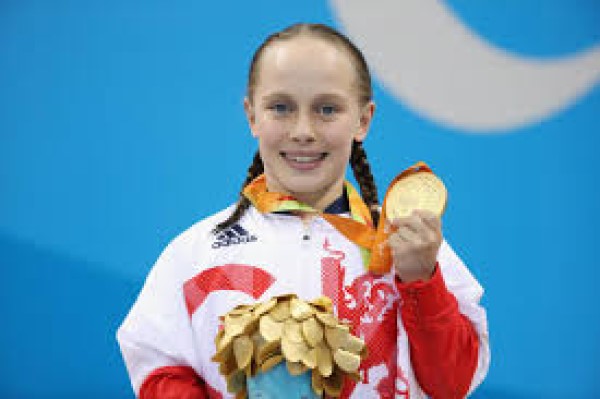
Ellie Robinson’s breakthrough came at the 2016 Rio Paralympic Games. At just 15 years old, she arrived in Brazil as one of the youngest members of Team GB.
Many people expected her simply to gain experience at her first Paralympics. Instead, Robinson produced one of the most memorable performances of the Games.
She won gold in the women’s S6 50m butterfly, setting a Paralympic record in the process. Her emotional celebration after touching the wall became one of the defining images of the tournament.
The young swimmer also won bronze in the S6 100m freestyle, proving that her success was no accident. Overnight, Ellie Robinson became a household name in Britain.
Her achievements were especially inspiring because of her age. Winning Paralympic gold at 15 placed her among the youngest British champions in history and established her as one of the nation’s most promising athletes.
Becoming a National Inspiration
After Rio 2016, Ellie Robinson became one of the most recognisable faces in British sport. Her story resonated with people of all ages because it combined sporting excellence with genuine humility and honesty.
Robinson’s success inspired many young disabled athletes to pursue their own dreams. She showed that physical challenges do not have to prevent success at the highest level.
In recognition of her achievements, she won the BBC Young Sports Personality of the Year award in 2016. The honour reflected not only her sporting accomplishments but also the inspiration she provided to the public.
She also received widespread praise for her positive attitude and willingness to speak openly about disability, confidence, and mental health.
Commonwealth and World Championship Success
Ellie Robinson continued to achieve success after the Rio Paralympics. She represented England at the 2018 Commonwealth Games on the Gold Coast and delivered another impressive performance.
She won gold in the women’s S6 50m butterfly, further confirming her status as one of the world’s leading para swimmers.
In addition to Commonwealth success, Robinson also competed at World Championships and European Championships, consistently earning medals for Great Britain.
Her performances made her one of the key figures in British Para Swimming during a highly successful period for the national team.
Challenges Behind the Success
Although Ellie Robinson achieved enormous success, life as an elite athlete was far from easy. Training at the highest level placed huge physical demands on her body, particularly because of her disability and later health complications.
The diagnosis of Perthes disease created ongoing pain and mobility issues. Robinson spoke honestly about the emotional and physical difficulties she experienced while trying to continue competing.
Elite sport often requires athletes to push themselves beyond normal limits, but Robinson eventually realised that continuing her career was affecting her long-term health and happiness.
Her honesty about these struggles was widely respected. Many athletes feel pressure to hide pain or mental exhaustion, but Robinson chose to speak openly about the realities of life in elite sport.
Retirement from Competitive Swimming
In 2021, Ellie Robinson announced her retirement from competitive swimming at the age of just 20. The decision shocked many fans because she was still considered one of Britain’s leading para athletes.
However, Robinson explained that persistent pain and the demands of training had made retirement the right decision for her wellbeing.
Rather than viewing retirement as a failure, she described it as a positive choice that allowed her to move forward with her life on her own terms.
Her decision highlighted the importance of athlete welfare and mental health in professional sport. Robinson received praise for prioritising her health and happiness over medals and competition.
Although her swimming career ended earlier than many expected, her impact on British sport remained enormous.
Life After Swimming
Since retiring, Ellie Robinson has remained active in public life. She has worked as a television presenter, commentator, motivational speaker, and disability advocate.
Her experience as an elite athlete and public figure has made her a respected voice on issues relating to disability inclusion and mental health awareness.
Robinson has also inspired young people through school visits, public appearances, and media work. She continues to use her platform to encourage confidence, resilience, and self-belief.
Even after leaving competitive sport, she remains an important role model in British society.
Ellie Robinson’s Legacy
Ellie Robinson’s legacy extends far beyond medals and records. She changed perceptions of disability in sport and inspired a new generation of athletes across the United Kingdom.
Her journey proved that talent, determination, and courage can overcome enormous obstacles. She became a symbol of perseverance and positivity during one of the most successful eras in British Paralympic history.
Robinson also helped bring greater attention to para sport, encouraging wider public appreciation for Paralympic athletes and their achievements.
Perhaps most importantly, she showed young disabled people that they should never allow society’s expectations to limit their ambitions.
Conclusion
Ellie Robinson’s story is one of extraordinary determination and achievement. From overcoming the challenges of a rare disability to becoming a Paralympic champion at just 15 years old, she inspired millions with her courage and talent.
Her success in swimming, combined with her honesty about the realities of living with disability and chronic pain, made her one of Britain’s most admired athletes.
Although her competitive career ended early, Robinson’s influence continues to grow through her advocacy, public work, and inspirational message. She remains a powerful example of resilience, confidence, and hope.
Ellie Robinson will always be remembered as not only a Paralympic gold medallist but also as a true inspiration who transformed British para sport forever.